

Pseudopod is our Linux RMM platform — remote monitoring and management built for Linux from the ground up, and transparent by design.
RMM is how a modern IT team keeps a fleet healthy: watch every machine, catch problems early, and reach in to fix them without driving to the rack. The catch is that almost every RMM tool on the market treats Linux as an afterthought, bolted on after the fact. We run a lot of Linux, so we built our own.
An amoeba reaches out by extending a pseudopod: a temporary arm that goes exactly where it's needed, then withdraws completely and leaves nothing behind. That's the model. We monitor continuously, reach in to do the work, you see every move, and there's no standing door left open once we're done.
What RMM is supposed to do (and where Linux gets shortchanged)
Remote monitoring and management is two jobs. Monitoring: know the state of every server before your users do. Management: get in and fix things quickly and safely. Most platforms treat Linux as a checkbox — thin agents, shallow metrics, clumsy remote access.
There's a second gap, and it's worse: how the tool gets in. Remote IT has always run on faith. A provider connects to your server, does something, closes the ticket, and what actually happened in that session is anyone's guess. The access path is usually an internet-exposed SSH port or a VPN box sitting on your network, waiting for anyone to knock — a standing target, scanned within minutes of going live.
Pseudopod is built for Linux first, and it closes both gaps: the blind spot and the open door.
How it works
A lightweight agent, connecting outward. Each Linux system runs a small agent that connects out to our console and reports its health continuously. Nothing on your infrastructure listens for an inbound connection, so there are no remote-access ports exposed to the internet at all. If it can't be reached from the outside, it can't be attacked from the outside.
Continuous monitoring. Load, disk, services, security posture, the things that fail quietly at 2 a.m. — watched around the clock, with alerts that reach our team before the outage reaches yours.
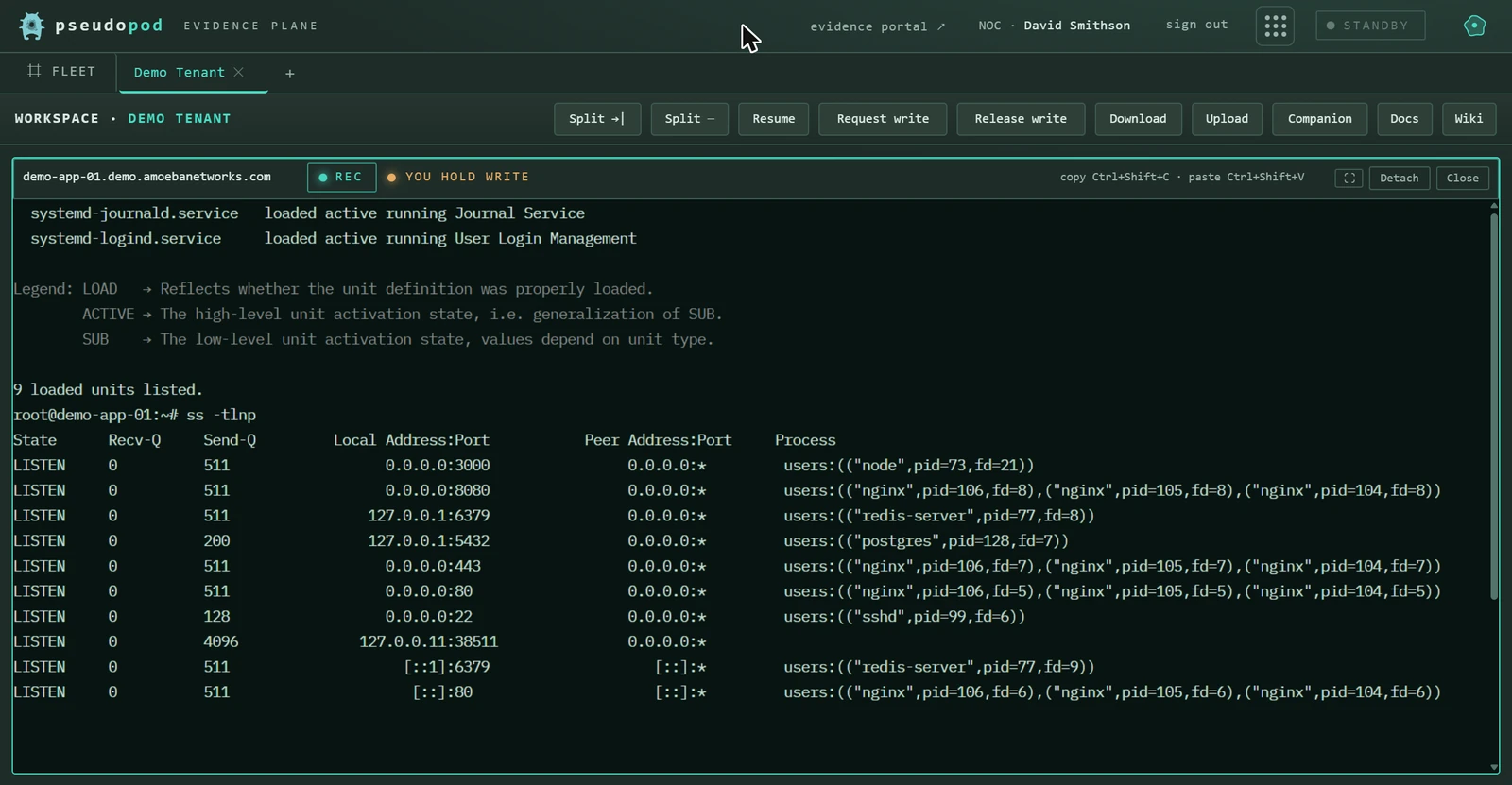
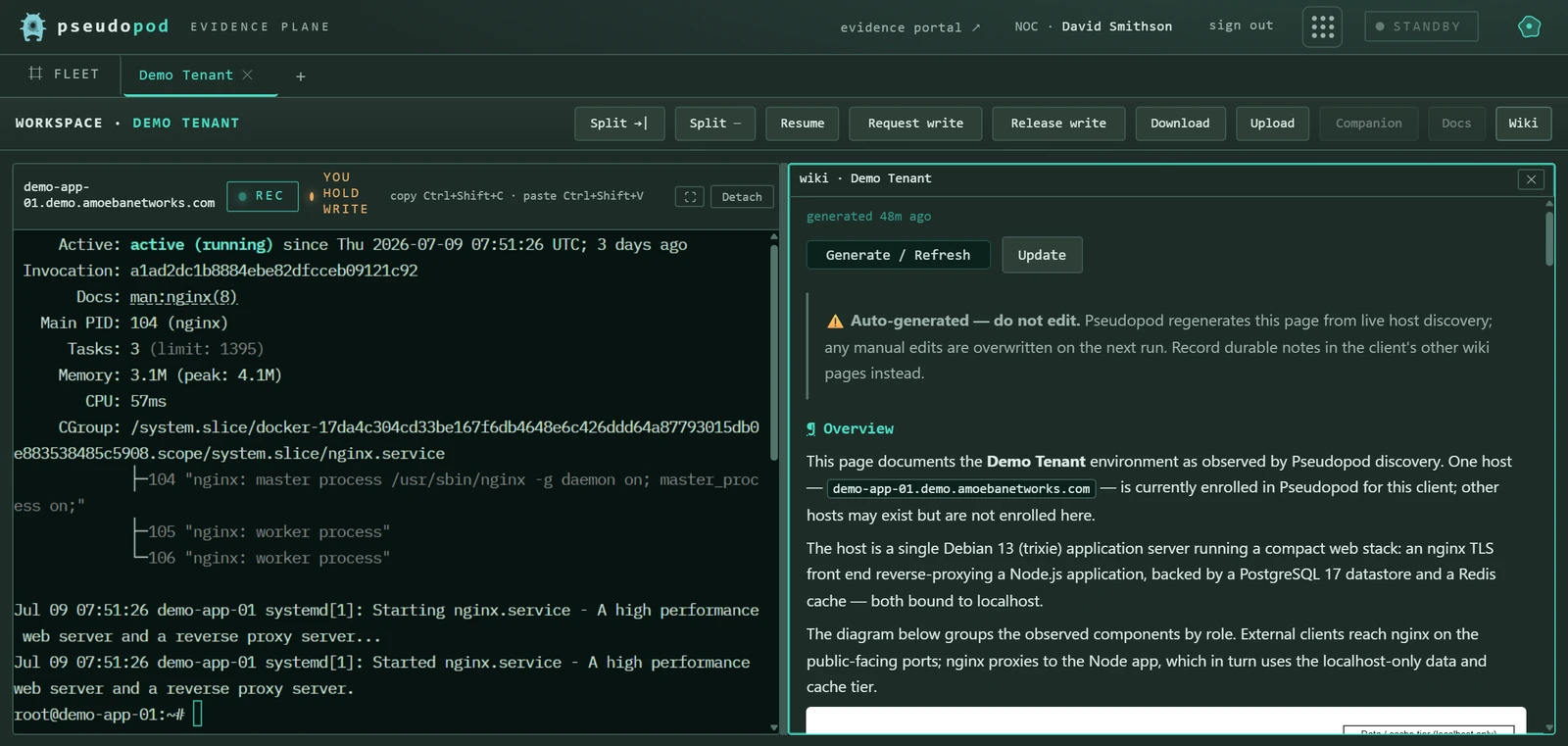
Every session, captured. When management means logging in, all shell activity our engineers run flows through a single portal and is recorded from the moment we connect to the moment we leave. Every command, every response.
An evidence chain, not a log file. Sessions are written to a tamper-evident evidence chain. Replay any past terminal session, review exactly who did what and when, and hand an auditor a real record instead of a promise. Audit season stops being a scramble.
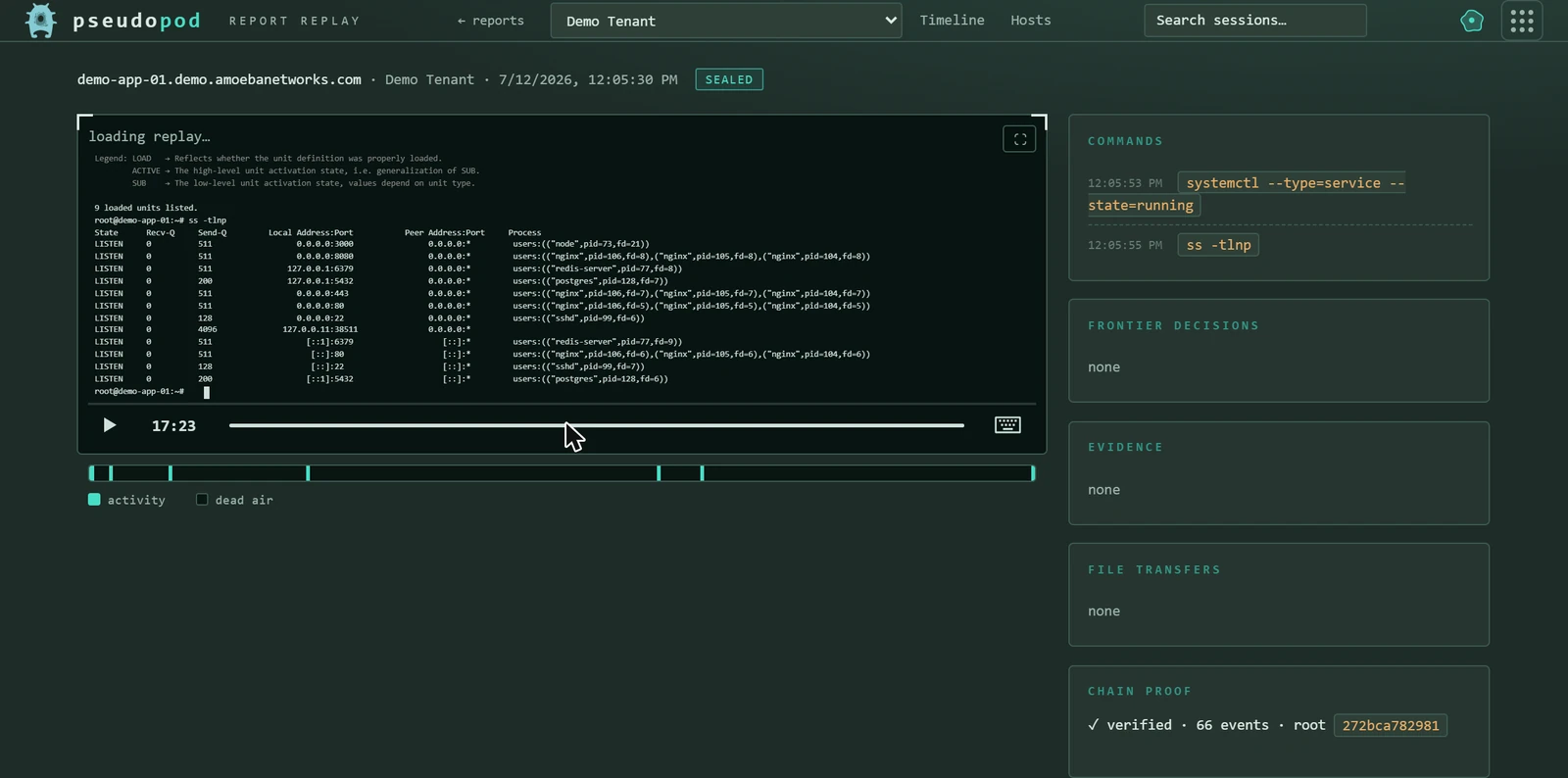
Live, when you want to watch. Open the portal and watch a session as our engineer types. Transparency isn't a report we email you afterward. It's a window that stays open.
Watch it in action
Where it gets powerful
Pseudopod doesn't just monitor and record. It learns your environment from the work. Every session and every metric feeds a living map of your Linux estate: what runs where, how it's configured, how it behaves.
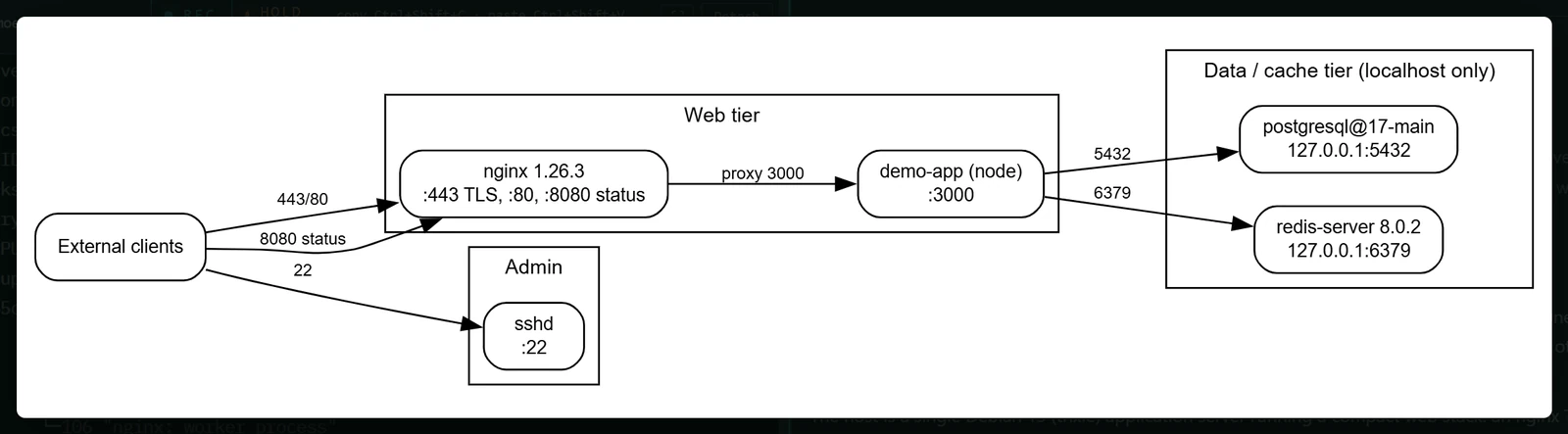
That documentation means the next engineer who picks up your ticket starts with full context instead of rediscovering your setup on your time. And it powers an AI troubleshooting companion our team can bring in when a problem needs the extra horsepower, grounded in your actual environment rather than generic advice.
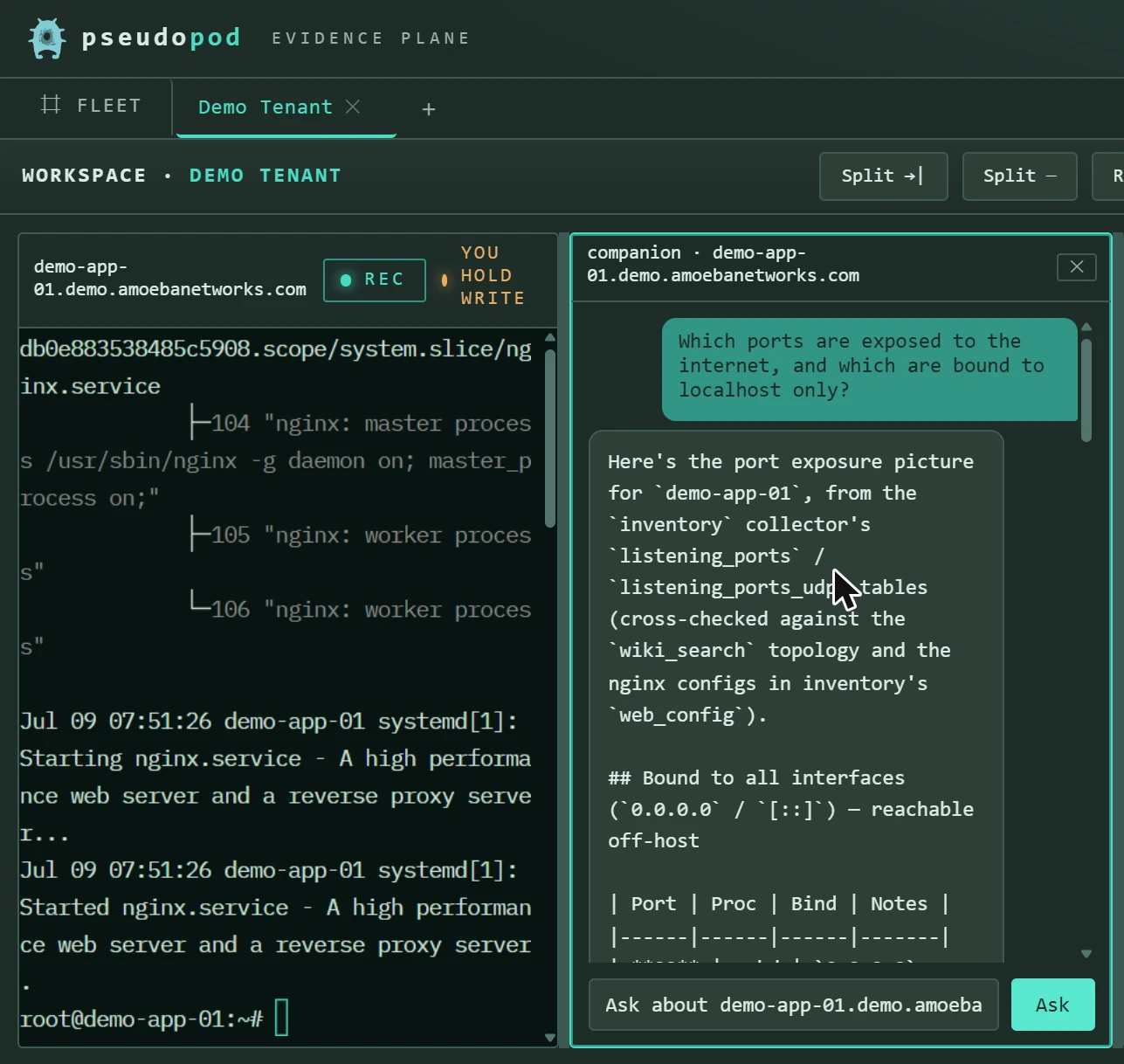
The result is faster response, faster resolution, and management that gets a little smarter about your systems every day.
Built for Linux fleets
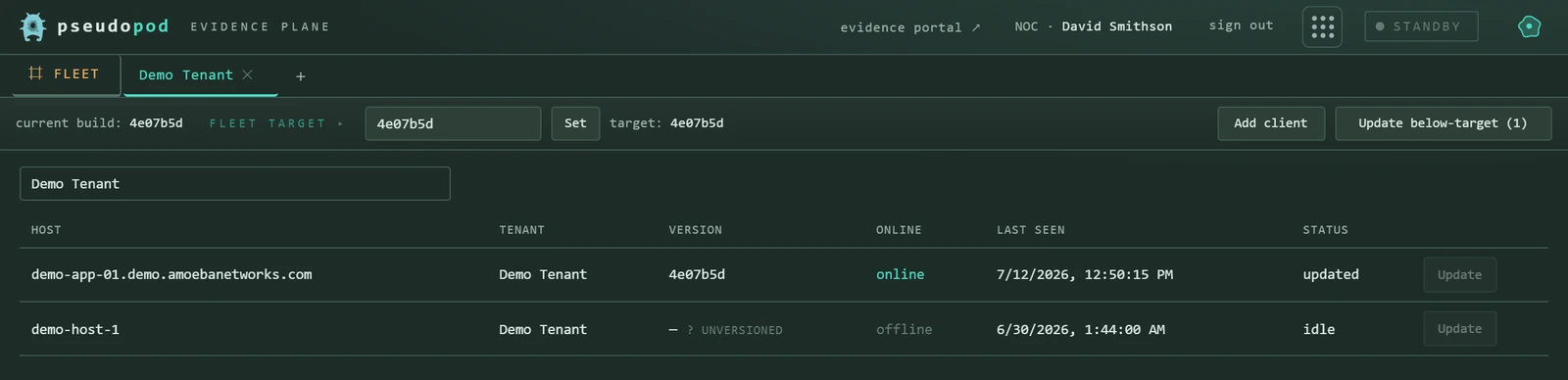
Pseudopod runs across the Linux systems that make up real business infrastructure, from a single co-located server to a fleet spread across clouds and closets. It handles Linux the way it should be handled — first-class, not bolted on after the fact. It plugs straight into our network monitoring and NOC work, so monitoring, response, and the evidence trail all live in one place.
It sits naturally alongside the rest of our cybersecurity practice. The same evidence chain that makes management transparent also gives you clean session records when you need to demonstrate control for compliance or cyber-insurance.
What Pseudopod gives you:
- Continuous monitoring — every Linux host watched around the clock, alerts before the outage
- Remote management — get in, fix it, get out, from anywhere
- Session replay — terminal playback of any past session
- Live view — watch management as it happens
- Evidence chain — tamper-evident session records
- No open ports — outbound-only agent, zero inbound exposure
- Living documentation — your Linux estate, continuously mapped
- AI-assisted troubleshooting — engineer-launched, loaded with your context
How we help
We run Pseudopod across the managed Linux fleets we support for businesses in the New York Metro and the Puget Sound (Seattle) area. If you've been stuck monitoring Linux with a tool that treats it as a second-class citizen — or you'd rather not have an open port waiting on the internet for your provider — this is the platform built for the job. Ask us for a demonstration on your own infrastructure.
See Pseudopod on your own Linux fleet
Tell us what you're running and we'll show you what real Linux RMM looks like: monitored around the clock, managed in the open, recorded and replayable.